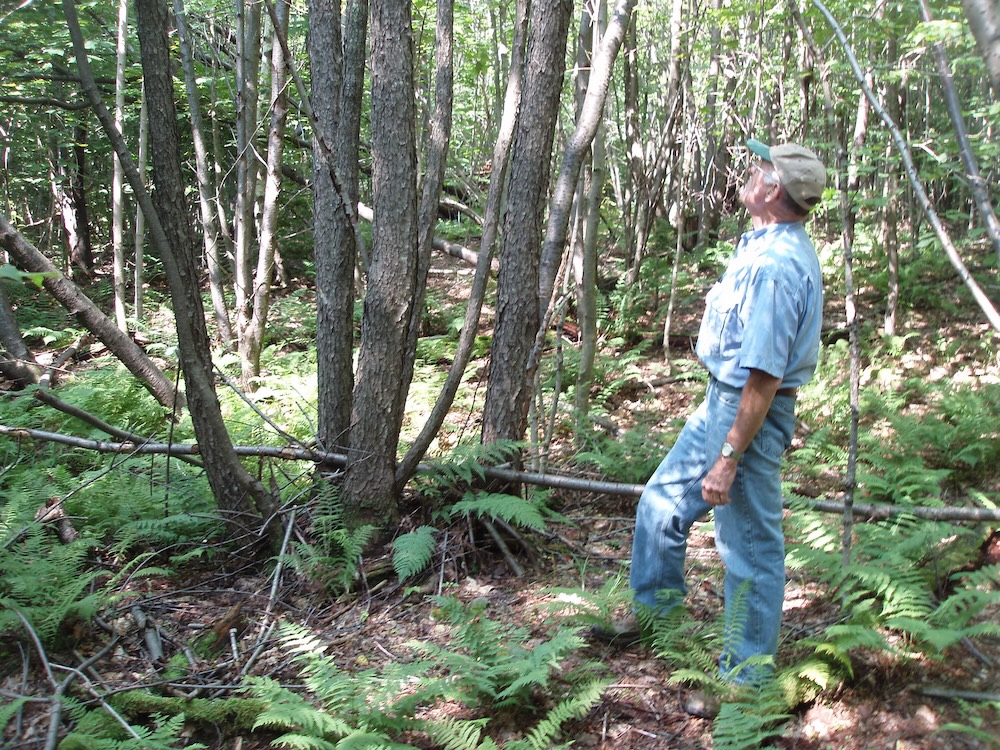
Your woods can be made up of several stands, or trees of similar size/age and species mix. These stands can be managed as separate units.
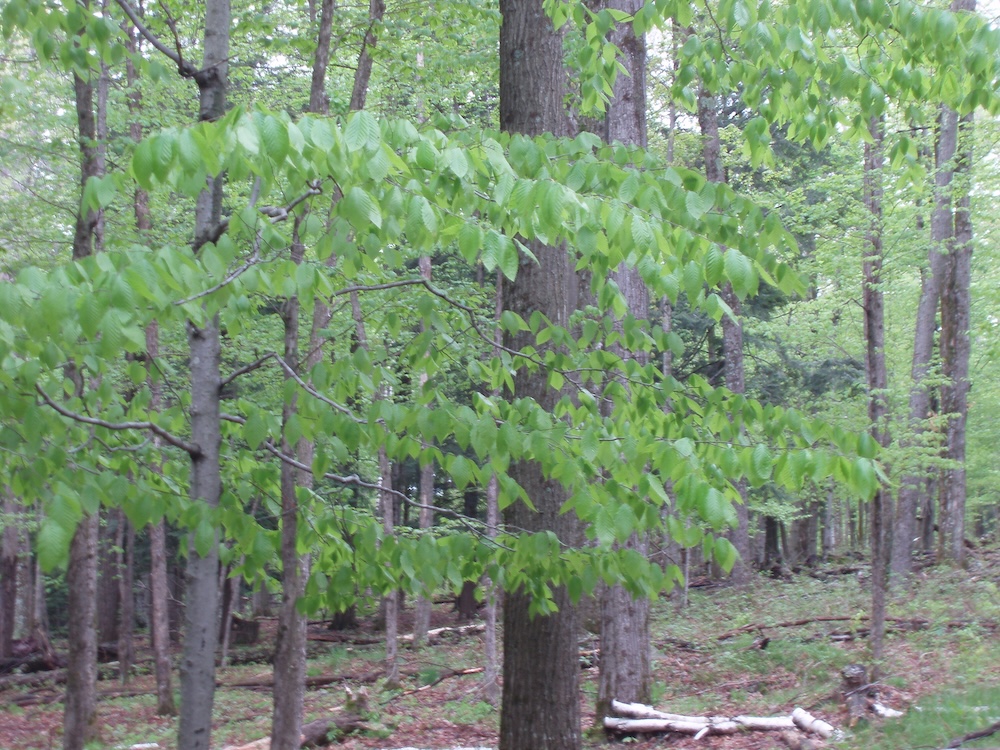
There are 4 basic stages of a stand’s growth:
- Seedling – trees less than one inch in diameter and less than three feet tall. Ten thousand per acre.
- Sapling – trees between one to three inches in diameter and fifteen to thirty feet tall. Thousands per acre.
- Pole timber – trees greater than three inches up to ten inches in diameter. Hundreds per acre.
- Sawtimber – majority of trees are twelve inches and greater in diameter. Hundreds per acre.
THE SEEDLING/SAPLING STAGES are basically a “do nothing” stage. The stand will eliminate hundreds to thousands of trees as trees are shaded out and die. However, you or a forester can inventory the species mix so you know what is there. This can help you know your options. If there is a minor species that you would like to keep, make sure it isn’t overtopped and shaded out.
Key point: Thinning too early tends to lessen height growth.
POLE TIMBER STAGE: When the trees are mostly six to ten inches in diameter, it becomes beneficial to thin out trees you don’t want and favor trees you do want. At this point most of the height growth has happened and due to competition, the trees which have poorer genetics or lack of space have lost the race to have their crowns in the canopy. They have either died off or have smaller crowns and are stressed.
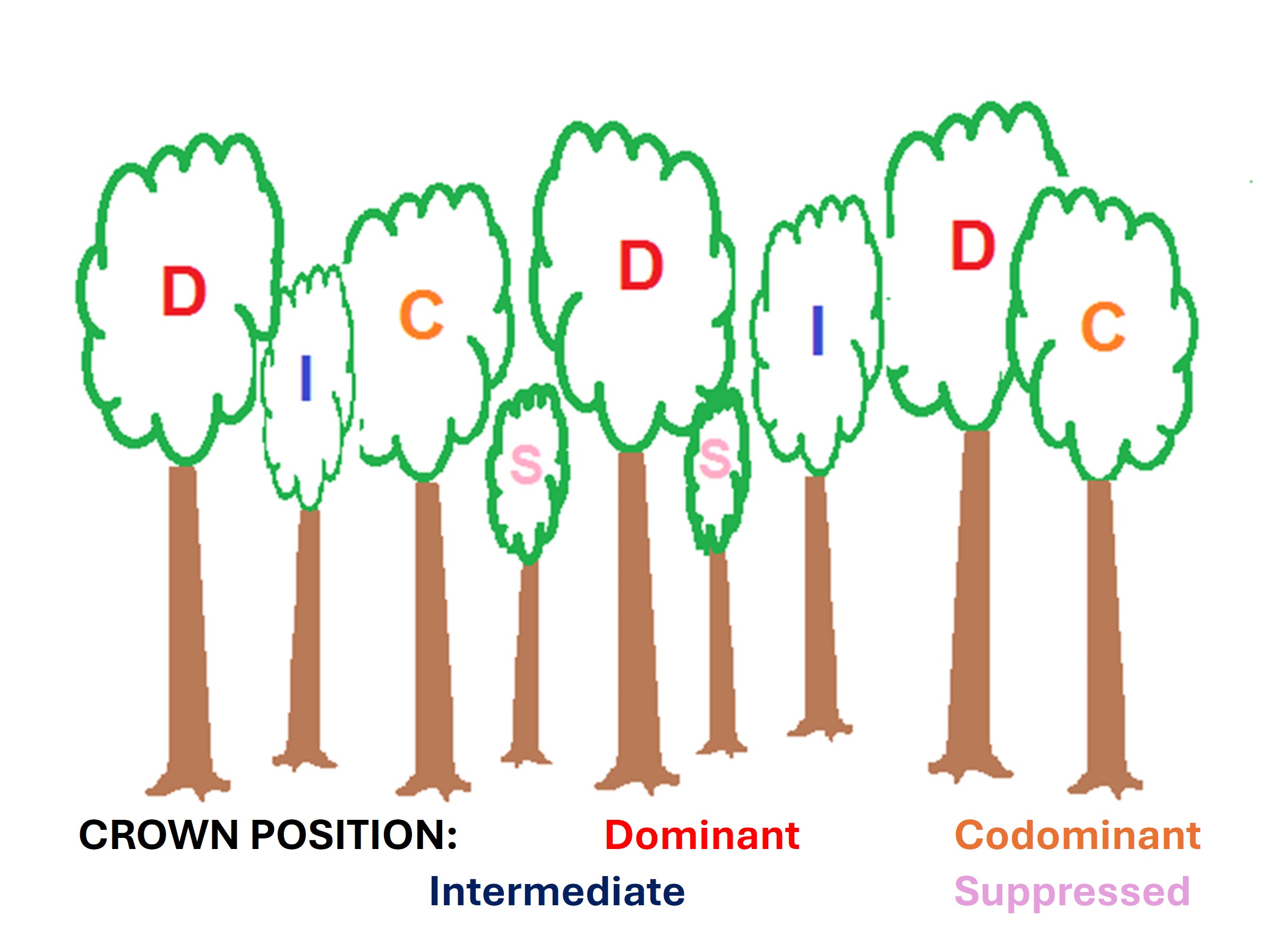
You are looking to free up trees with larger crowns. This would be mostly dominant and co-dominant trees with some intermediate ones if the species is important to keep in the stand.
Key Point: Suppressed trees will not respond to being thinned out around. They have poor genetics and should be eliminated from the stand.
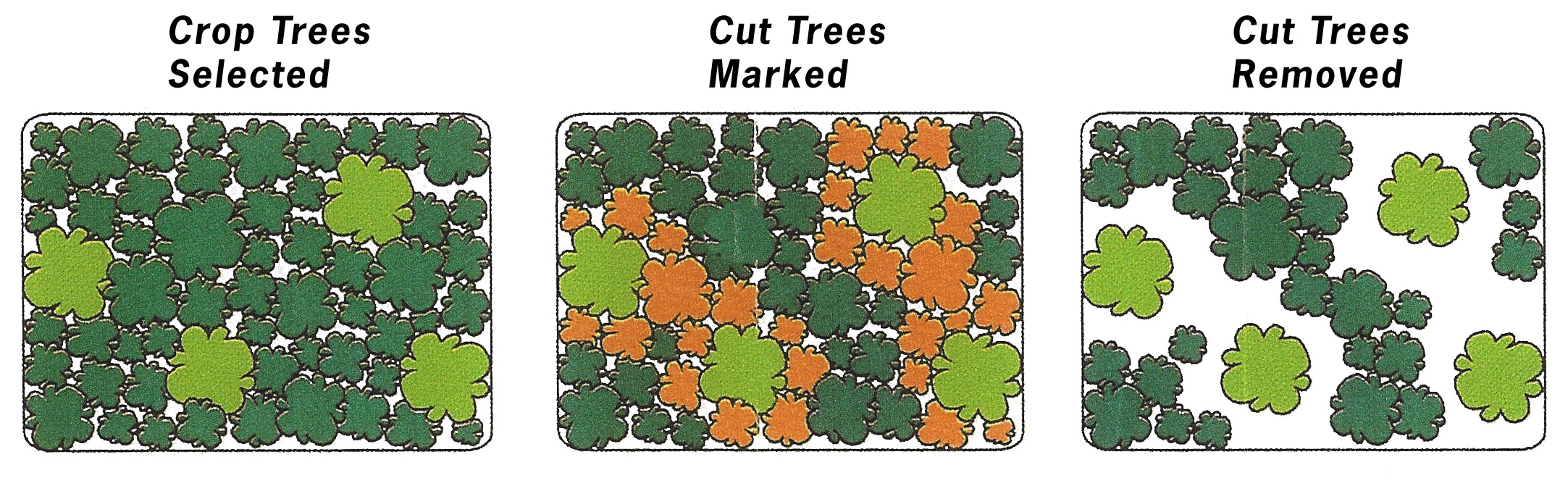
This series of pictures shows opening up canopy space on all four sides of a favored tree. This maximizes growth rate, but may have drawbacks for timber production. Opening up on two to three sides is best for future sawtimber trees. The goal is to create a twenty-foot distance between the crown of the favored trees and neighboring trees on two to three sides.
SAWTIMBER STAGE: You can thin out sawtimber too, just like with pole timber, favoring the dominant and codominant and some intermediate trees. The thinning will involve larger diameter trees.
Key benefits of thinning:
- Thinning speeds up growth rate due to increased space for the crown to grow into.
- Thinning keeps the tree healthier due to a larger crown size.
- Thinning increases the volume of saw timber cut during the stand rotation by allowing more trees to grow to a larger size as they are systematically given room to grow.
- Thinning makes firewood and pulpwood available.
- Harvesting trees creates an access system for recreation as well as management.
- Harvesting trees creates income to be used to pay taxes, etc.
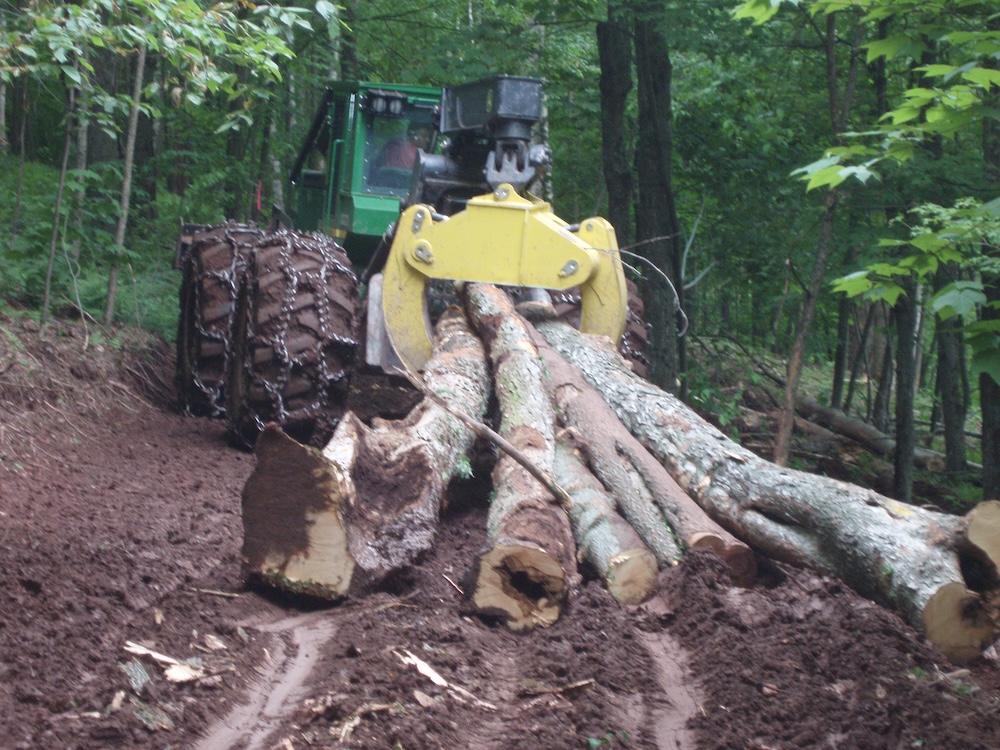
A consulting forester can help you make decisions about thinning your woods. Thinning is also referred to as Timber Stand Improvement or TSI. Here is a list of consulting foresters that work in the Catskills of southeastern NYS.
Here is a link to a PDF about Timber Stand Improvement or TSI.
Here is a link to a You Tube video about TSI.
Here is a link to a blog about thinning a stand.