This blog discusses several harvest planning considerations at Lennox Model Forest, including water quality, forestry research, interpretative signage, and BMP demonstrations.
The previous blog about planning for a timber harvest at Lennox Model Forest focused on forest inventory work that informed the harvest prescriptions in the various forest compartments. This blog emphasizes planning to protect water resources on site, as well as various citizen science research projects.
Preserving Research Sites
There are two ongoing citizen science research projects that should be protected during the harvest. The first is approximately 40 tagged white ash trees that are part of the Monitoring and Managing Ash (MaMA) program, which aims to track the spread of Emerald Ash Borer (EAB), monitor ash tree health throughout an EAB infestation, and identify lingering ash that have resistance to EAB. We have been monitoring these trees for 7 years, and while EAB sign has been spotted at Lennox, the tagged trees were still healthy as of summer 2024.
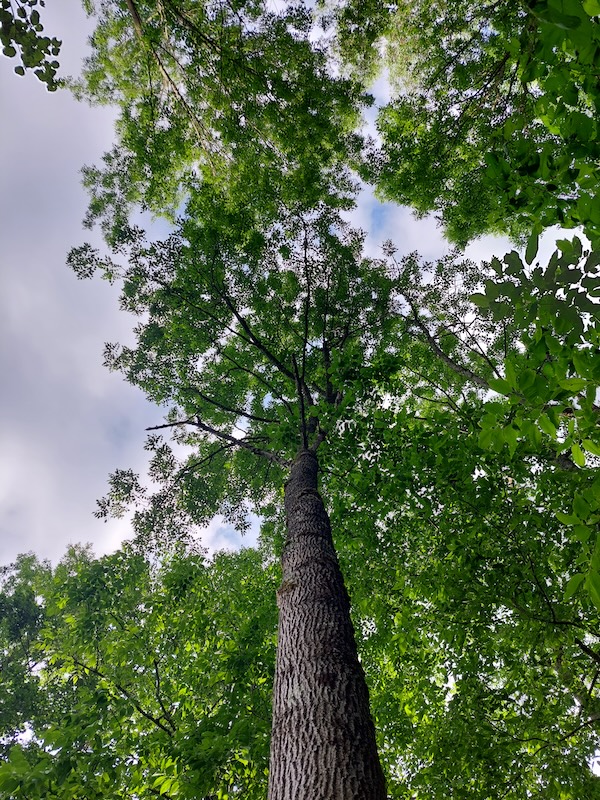
Healthy ash trees at Lennox Model Forest.
Most of the tagged trees are in Compartments GOL and L, while 4 tagged trees exist in Compartment B.
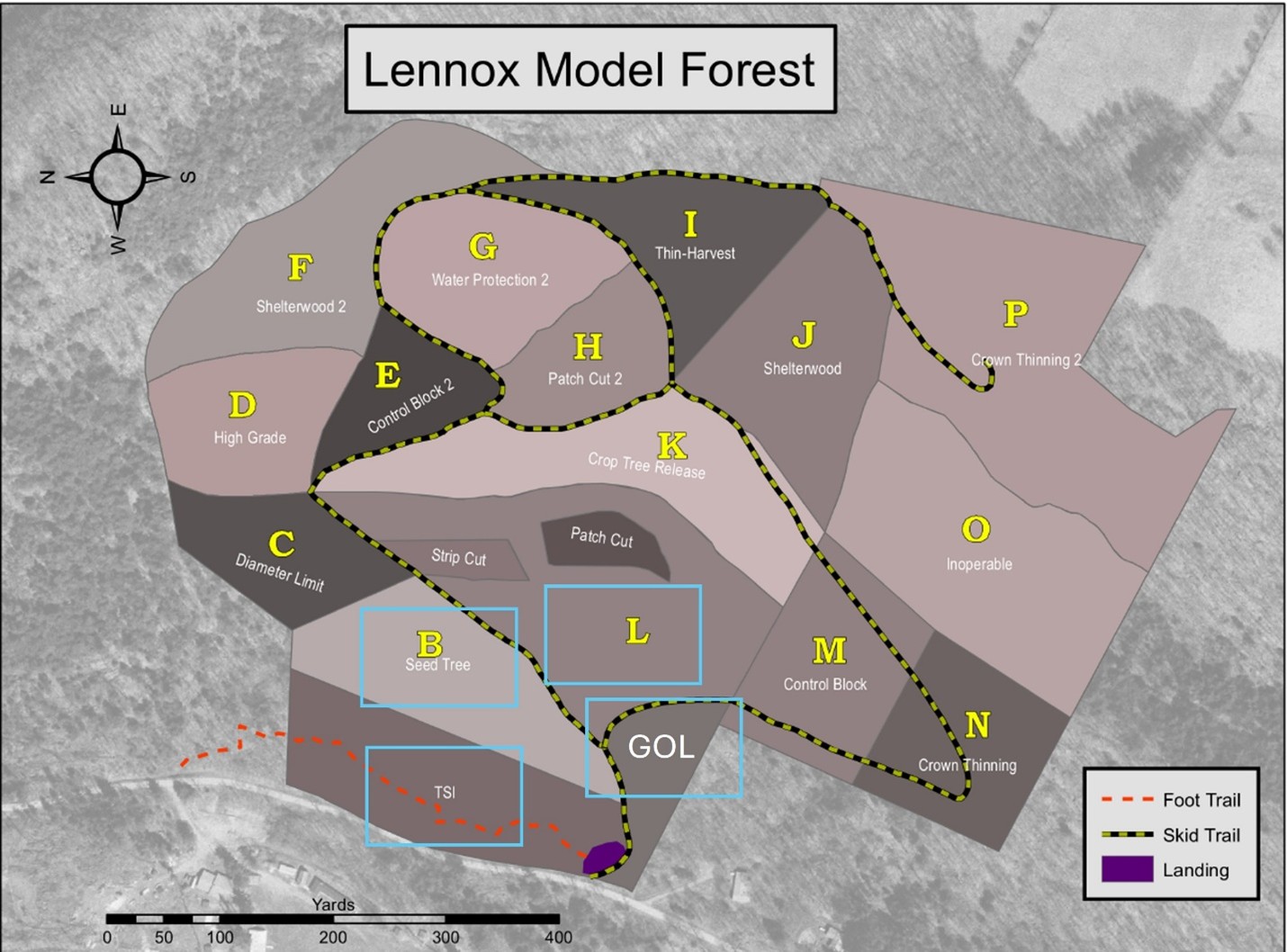
Compartments containing citizen science research.
Four Assessing Vegetation Impacts from Deer (AVID) plots are located along the trail through the TSI Compartment. These plots are used to determine the level of deer browsing pressure at Lennox and have been monitored since 2021. You can learn more about AVID here. The MaMA and AVID research sites will be clearly marked and pointed out to the logger to avoid damage during the harvest.
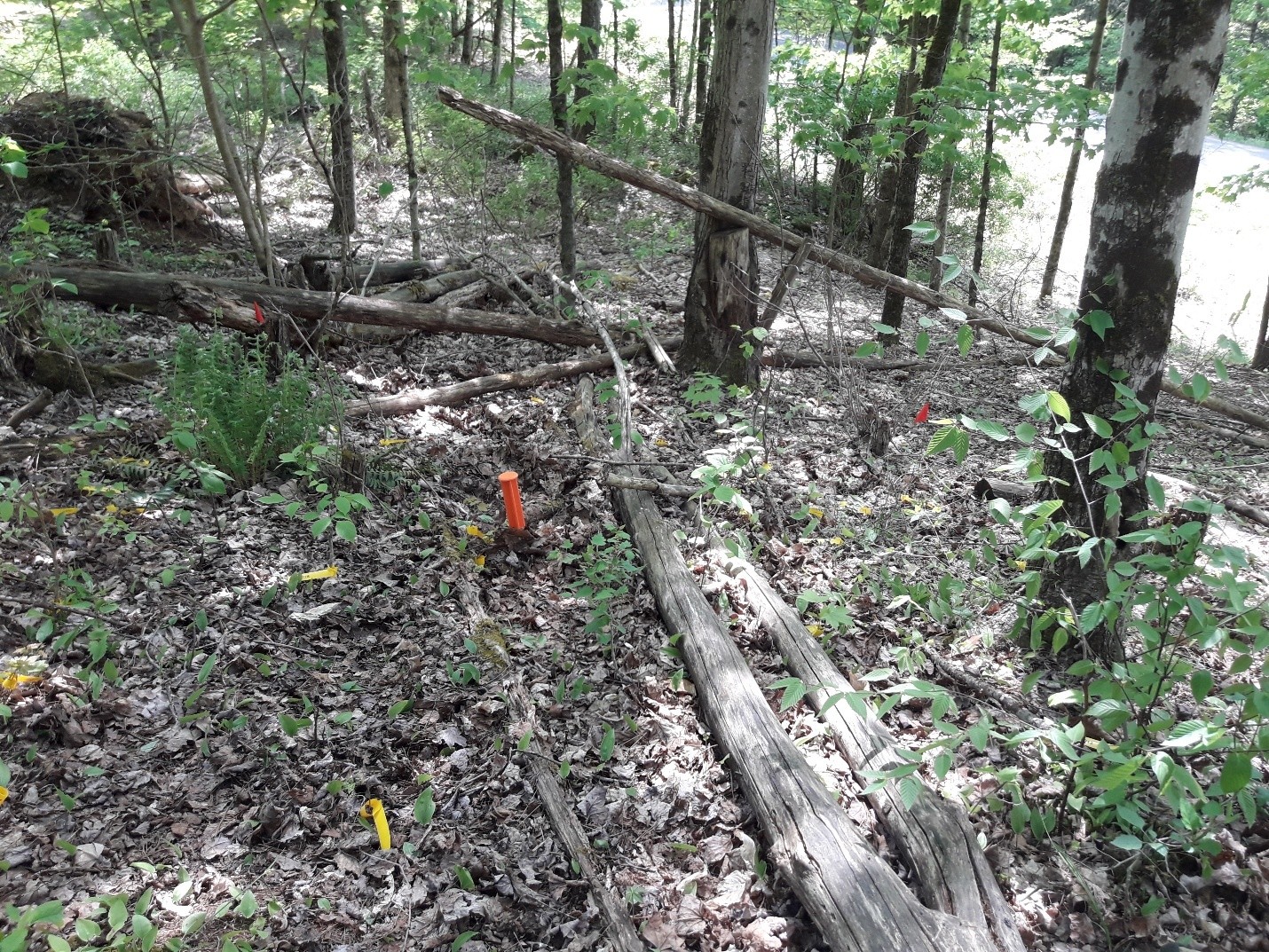
AVID plot in the TSI compartment near Arbor Hill Rd.
Protecting Water Resources
The northwest-facing slopes at Lennox are relatively dry, but there are some waterways on site that need to be protected during the harvest. The map below represents flowlines – streams and other channels that are likely to concentrate surface runoff – as well as a wetland boundary, in relation to the trail network on the model forest.
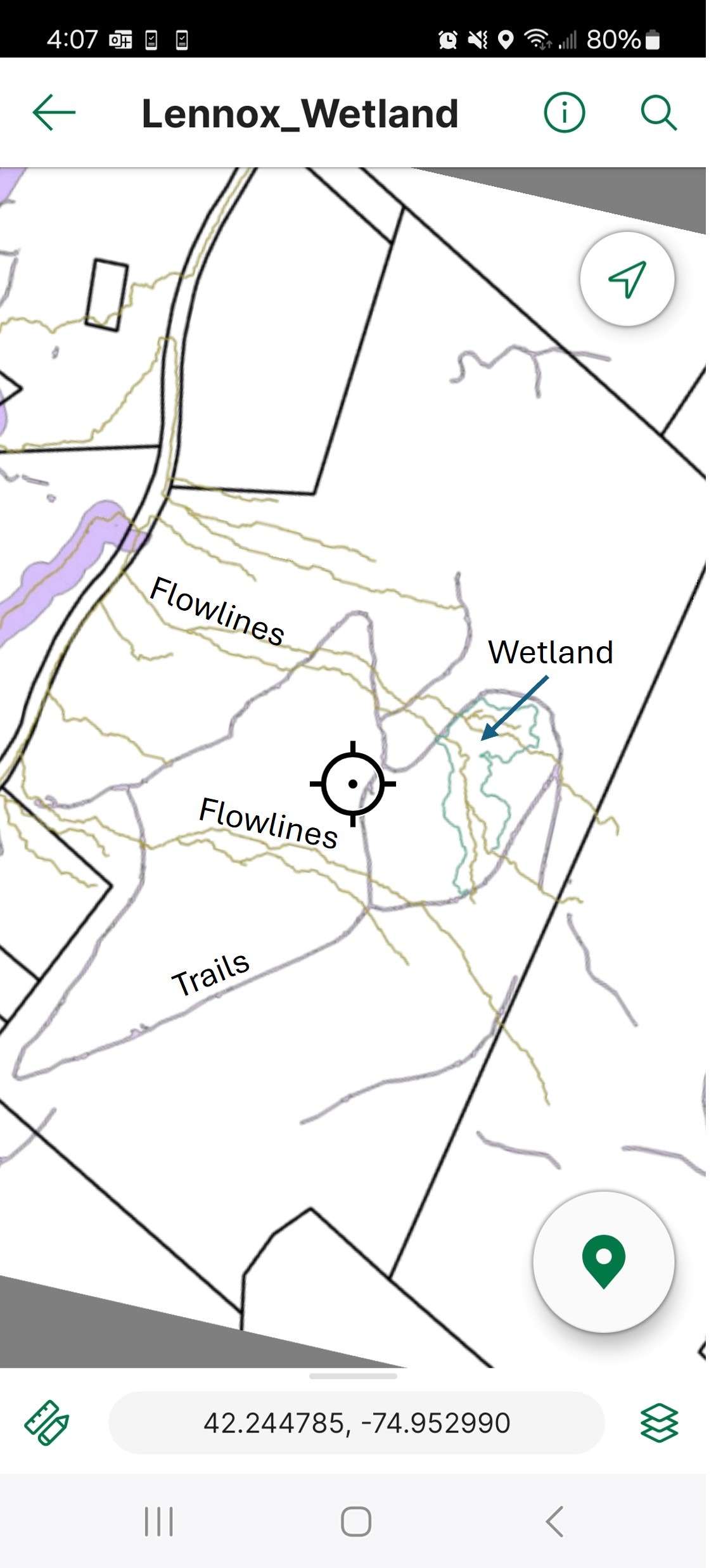
Waterways on the Lennox Model Forest in relation to the trail network.
Naturally, the wetland is wet most of the time. Its outflow is a stream that runs pretty much year-round and is the water source for Camp Shankitunk. Other flowlines on the model forest are intermittent and ephemeral streams.
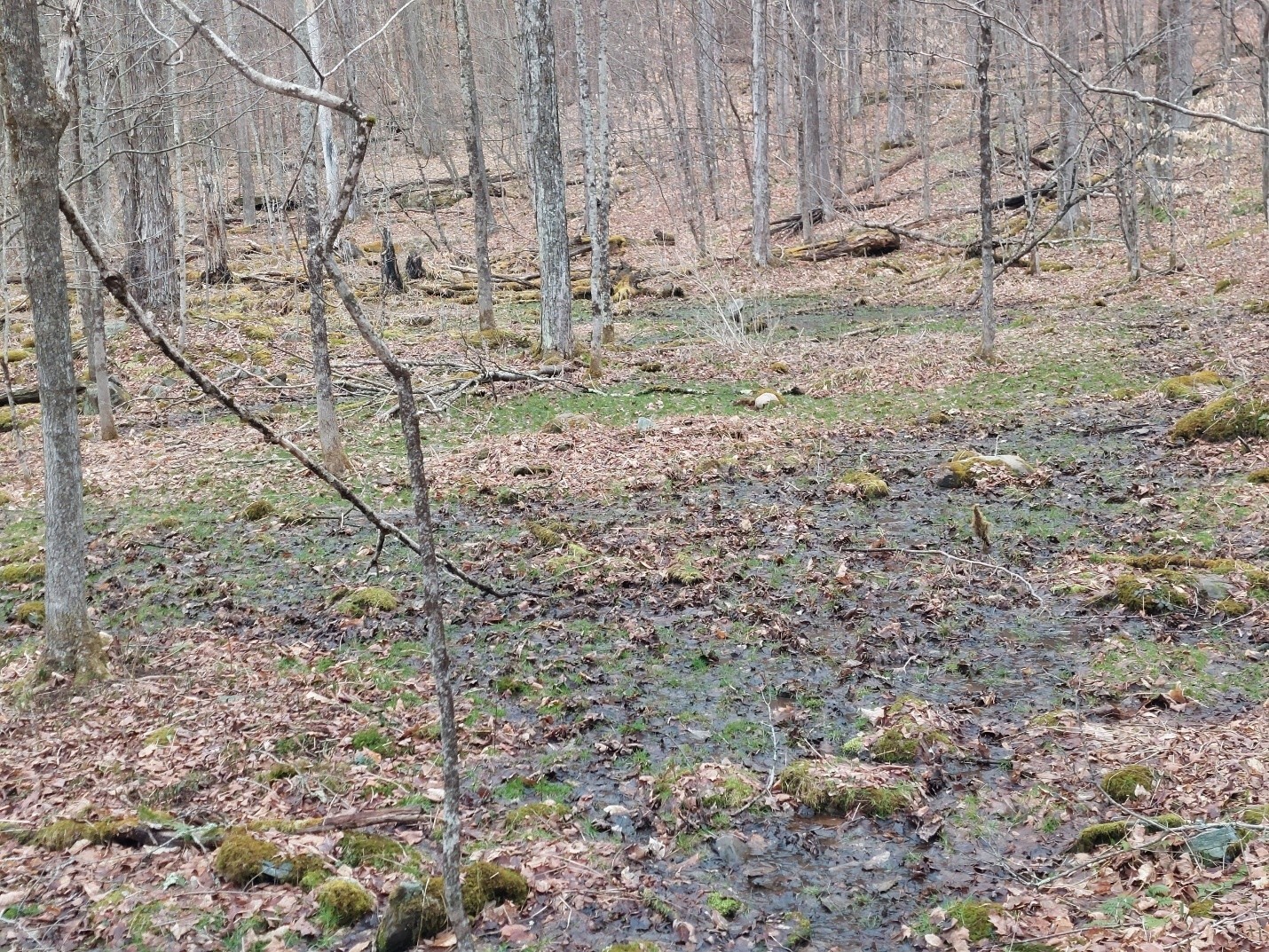
The wetland in Compartment G. Photo taken in March 2025.
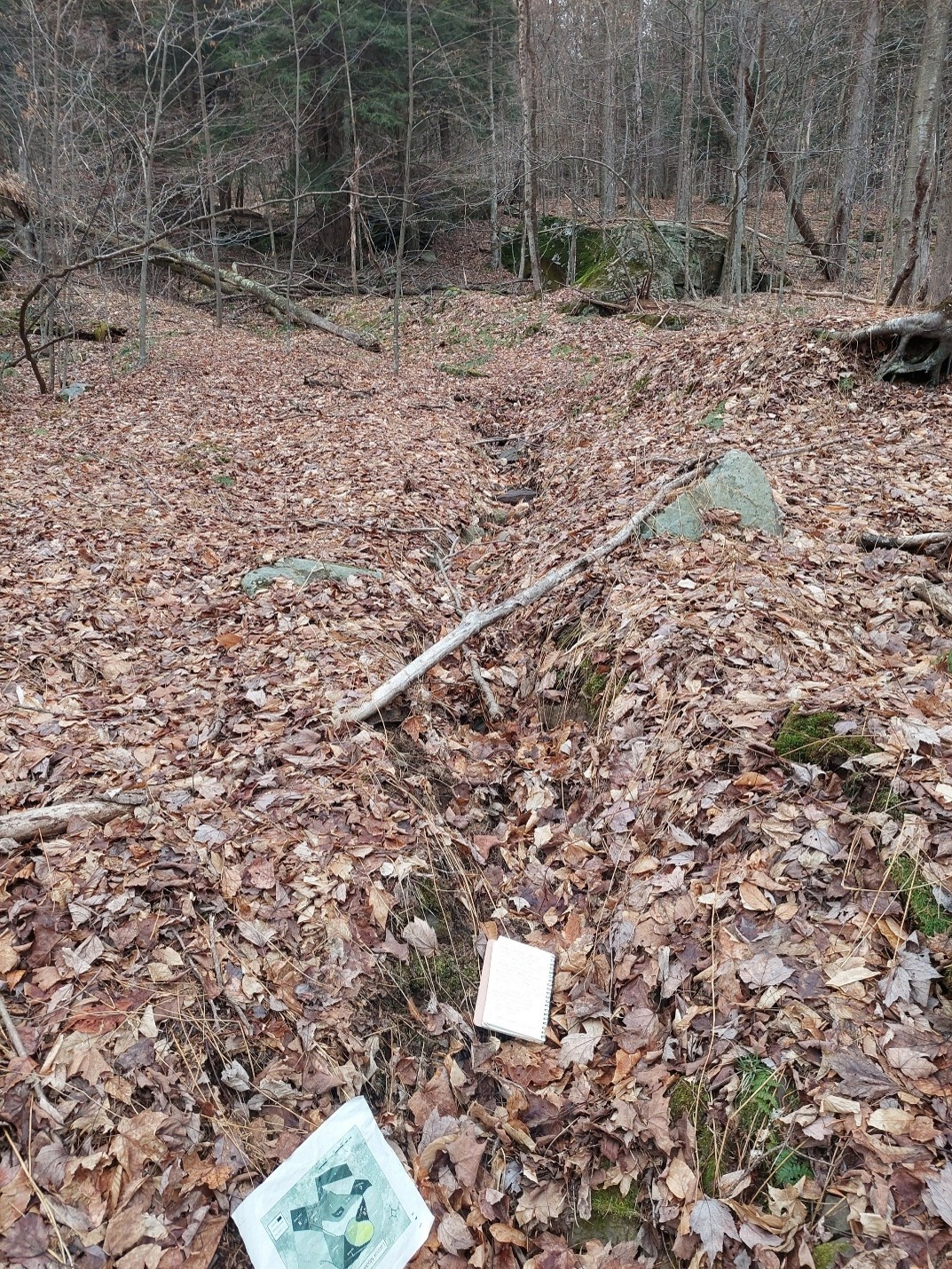
An ephemeral stream above Turtle Rock. Photo taken in March 2025.
What are the main areas of concern for water quality? Well, we plan to do the irregular shelterwood harvest in Compartment G, which has the wetland. Compartment L, where we plan to do a 1.6-acre clearcut, has some flowlines running through the middle of it.
We plan to keep skid trails and equipment out of the wetland in Compartment G, retain 75% of the pre-harvest basal area, and winch out any trees that are felled in the wetland. For the streams, we will keep skid trails 100 feet away from intermittent streams and minimize stream crossings. We will use skidder bridge panels or corduroy to cross where necessary, and like the wetland, we’ll maintain 75% of the pre-harvest basal area within 100 feet of the streams.
We don’t need to mark waterway boundaries but rather use maps and walk the site with the logger so they understand where sensitive areas are located. We may help the logger select stream crossing locations. This will be a BMP cost-share project where the logger works with one of our Watershed foresters to protect water quality on-site. You can learn more about our BMP cost-share program here.
Some other harvest considerations include protecting the interpretive signage located throughout the model forest. For that, we will remove the signs from their posts prior to the harvest and reinstall them afterwards. Some of the BMP demonstrations will undoubtedly be destroyed by skidder traffic. However, we will plan to build new open-top box culverts and belt deflectors to replace them.