Is garlic mustard the menace we think it is, or have we been pulling the wrong plant all along? A new perspective suggests we might be fighting the symptom, not the cause.
Here at WAC, we care deeply about managing invasive plants. So much so that we cover it in our Management Assistance Program (MAP), a program that invites landowners to apply for cost-share funding to help with common woodland stewardship activities. Under MAP’s Invasive Plant Control section, we offer eradication and control techniques to stop the spread of native and non-native plants that interfere with forest management goals.
But what actually is an invasive plant? Or a native one? A noxious weed? Understanding these definitions is essential before making removal decisions.
Key Definitions
Native plant: Species that have historically existed in a particular area or ecosystem. These plants have adapted to local climates and soils, co-evolved with native insects and wildlife, and are critical to ecosystem function. In the U.S., “native” typically refers to plants present before European colonization and are what we want to see thriving in New York’s grasslands, meadows, and forests.
Non-native plant: Species introduced either intentionally or accidentally through human activity. Also called “exotic,” “alien,” or “introduced,” these plants haven’t evolved locally. They aren’t automatically harmful; some are naturalized, meaning they have integrated into the ecosystem without significantly disrupting it. Others become invasive, posing threats to biodiversity and ecosystem health. This helps create the distinction between “non-native naturalized” and “non-native invasive”.
Invasive plant: Non-native species that aggressively spread, outcompete native plants, alter ecosystems, and lack natural predators. According to the National Invasive Species Information Center, these species are “likely to cause economic or environmental harm.”
Weed: Simply a plant growing where it isn’t wanted. A weed can be native or non-native, invasive or non-invasive. However, a “noxious weed” is officially designated by a government agency as harmful to agriculture, public health, or ecosystems, and landowners are often legally required to control or remove it. (Note: having “weed” in the name, like milkweed, doesn’t make it a weed!)
Revisiting Garlic Mustard
These definitions help us group plants ecologically, but personal perception also plays a role. Two people might look at the same plant, with one calling it “invasive” and another calling it “naturalized.” A plant that’s at the center of this debate? Garlic mustard. Dr. Bernd Blossey, Professor in the Department of Natural Resources at Cornell University, has been asking us to rethink garlic mustard’s reputation and whether treating it as a typical invasive is actually effective or necessary.
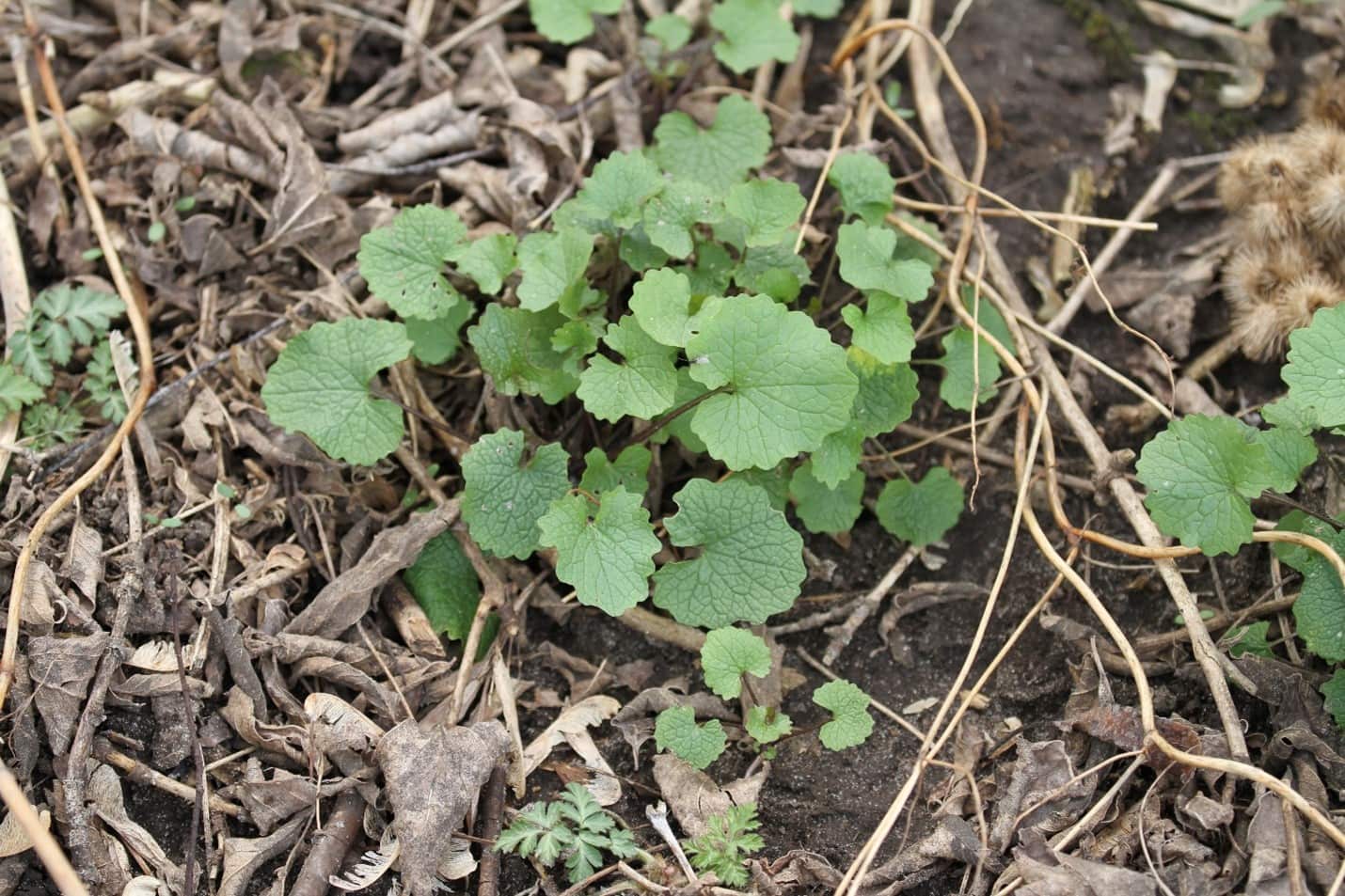
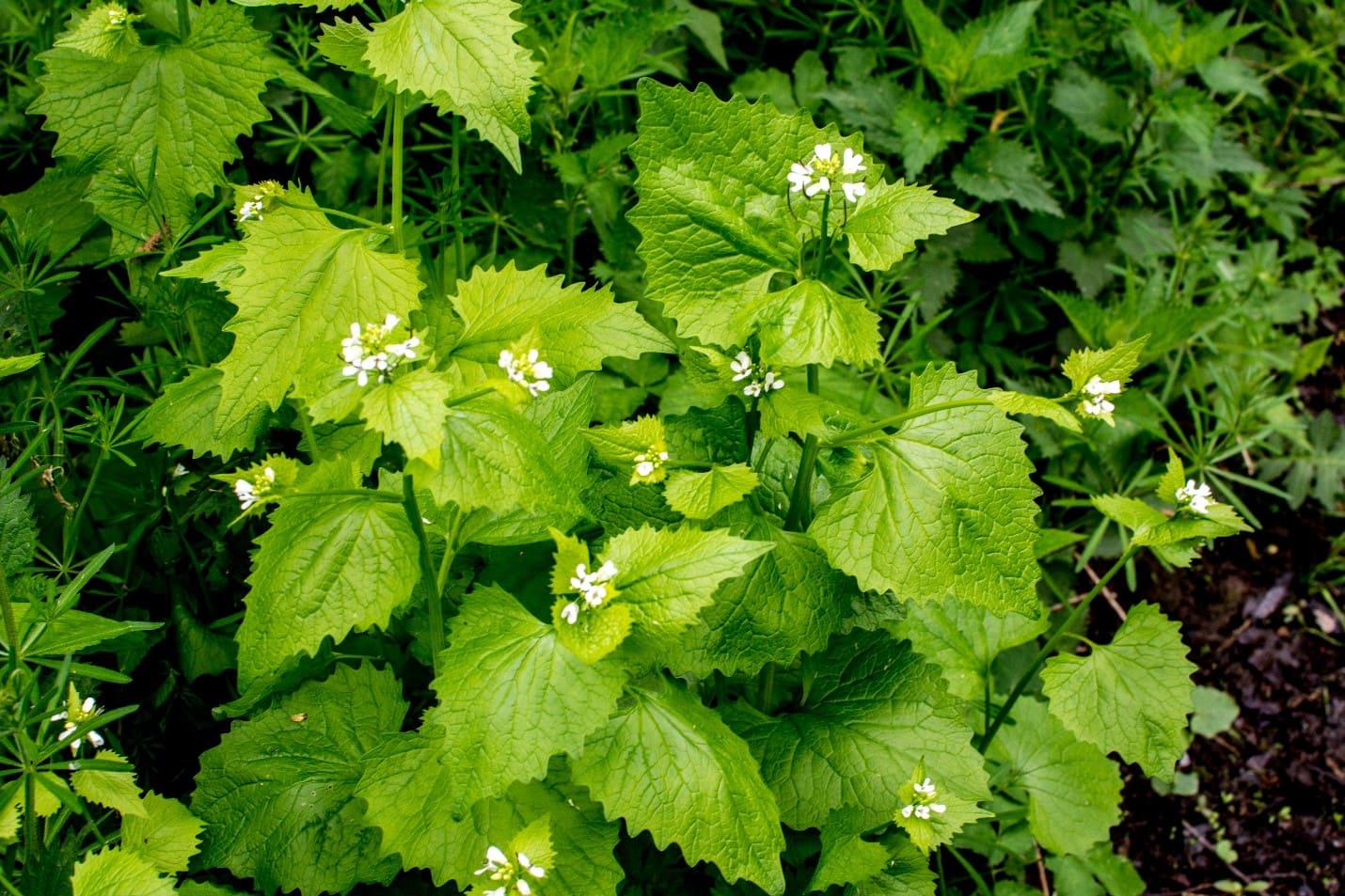
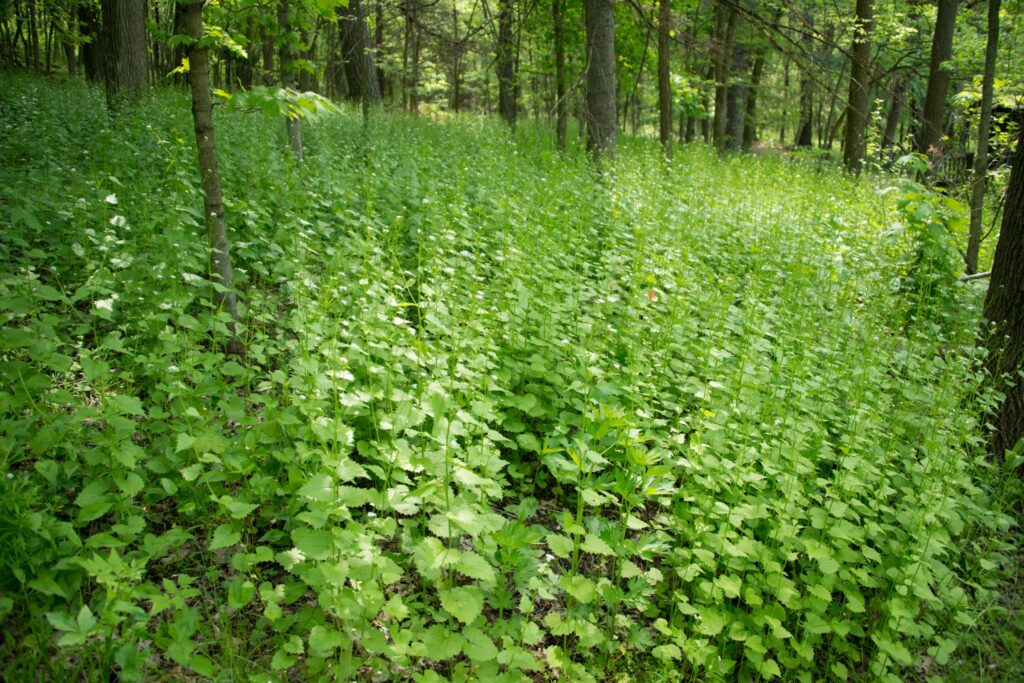
Garlic mustard (Alliaria petiolata) is native to Europe and was introduced to the U.S. in the 1860s, first observed on Long Island, NY. It’s edible, completes its life cycle in two growing seasons, grows 2–4 feet tall, and forms dense stands that appear to outcompete native plants by monopolizing sunlight, moisture, and nutrients. It also releases a chemical that suppresses nearby plant growth. At least eight U.S. states list it as a noxious weed.
Because of this reputation, landowners often try to remove it by hand-pulling. However, garlic mustard is incredibly difficult to eliminate this way. It thrives in disturbed soils, and pulling it up can actually worsen the problem because its seed bank is long-lived, and it can regenerate from root fragments left in the ground.
A Different Perspective
Dr. Blossey’s research suggests something surprising: garlic mustard seems to decline on its own. His studies indicate that it creates a negative soil feedback loop, meaning the more garlic mustard that grows in an area, the more it alters the soil in a way that ultimately inhibits its own success. Not only did Blossey test this experimentally, but he observed it on his own property. WAC’s own Watershed Forester, Andrew Krutz, echoed this experience:
“I've meticulously been removing the second-year plants well before they go to seed, as well as the rosettes for three years, but have not seen any noticeable changes. So what Blossey says makes a lot of sense to me.”
Blossey also found that pulling garlic mustard harms soil microbes and bacteria that develop around its roots, disrupting soil communities and making it harder for native plants to reestablish, paradoxically increasing garlic mustard’s chances of returning. He also found that the plant only grows in soils populated by non-native earthworms, not in healthy, undisturbed forests with thick leaf litter. He also found no evidence that garlic mustard directly outcompetes native plants. Instead, high deer populations that browse native species seem to create the opening for garlic mustard to move in. In other words, garlic mustard follows disturbance, it doesn't cause it.
Rethink, Reframe, Respond
Dr. Blossey’s conclusions were clear: garlic mustard does not directly reduce plant diversity and it doesn’t seem to negatively affect wildlife. Does this mean that we should ignore garlic mustard entirely? No, but it does mean we need to ask better questions: What is the true driver of plant loss and poor regeneration? Is the real issue garlic mustard, or is it soil degradation, imbalanced forests, invasive earthworms, and overabundant deer?
Understanding plant dynamics is ongoing work. Rather than rushing to treat symptoms, we need to do better in identifying root causes of ecosystem imbalance. That starts with rethinking how we label and manage species like garlic mustard. Is it time to shift our thinking from invasive enemy to naturalized participant in a complex ecological story? Dr. Blossey seems to think so.